
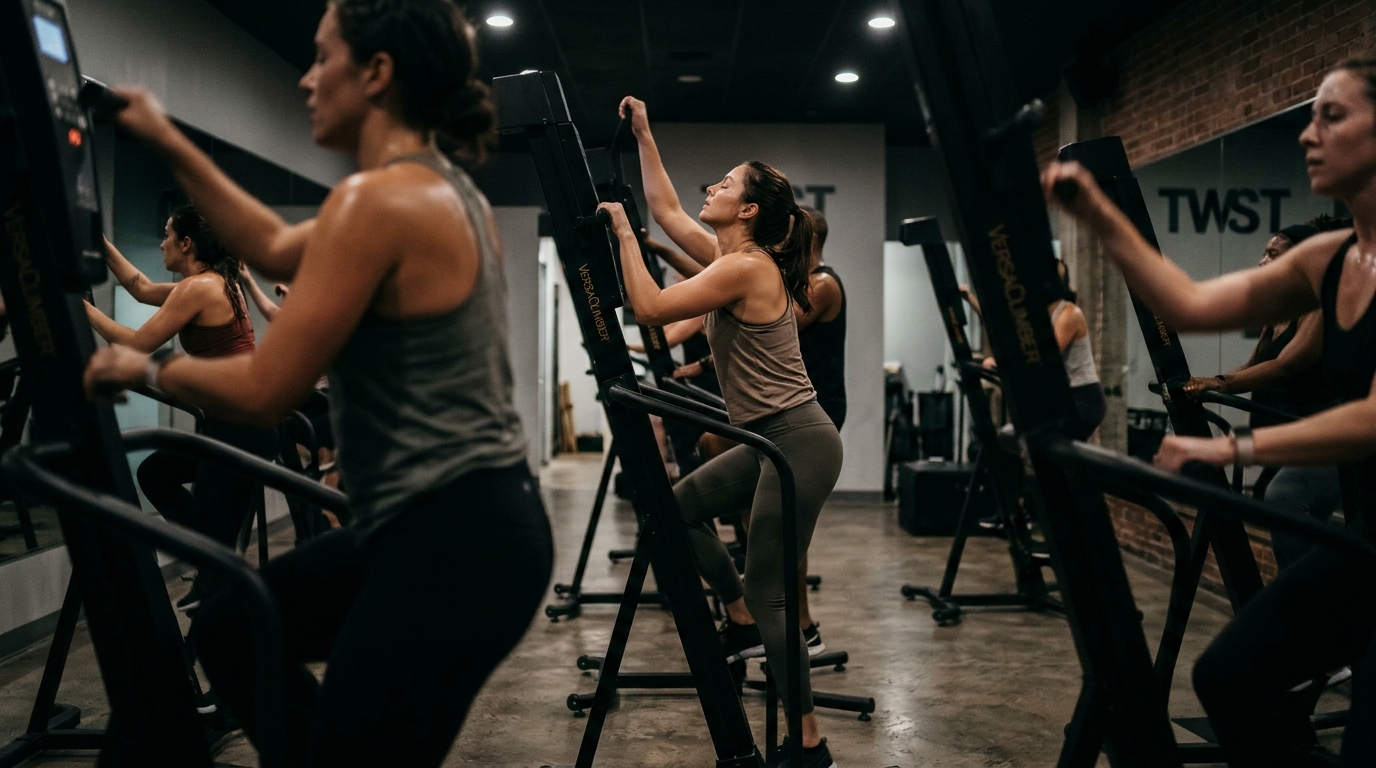
Consistency is the primary driver of cardiovascular and muscular adaptation in vertical climbing. At TWST Fitness, we coach clients to find a rhythm that balances intensity with recovery. The ideal schedule depends on your current fitness baseline and specific goals, but most people see significant results with two to four sessions per week.
1. The Beginner Baseline: Two Sessions Per Week
Start with two non-consecutive days to build a sustainable habit. For new climbers, the body needs time to adapt to the unique vertical motion and sustained upper body engagement. Two sessions per week, such as Tuesday and Friday, allow for adequate recovery while establishing a routine. This frequency is ideal for those transitioning from sedentary lifestyles or returning to exercise after a long break.
2. The Endurance Builder: Three Sessions Per Week
Three sessions per week is the sweet spot for most intermediate climbers. This frequency provides enough stimulus to improve cardiovascular capacity and muscular endurance without risking overtraining. Spacing the classes across the week, like Monday, Wednesday, and Saturday, ensures you are not stacking high-intensity days back-to-back. This schedule is perfect for those who want to see visible changes in body composition and stamina.
3. The Athlete’s Peak: Four to Five Sessions Per Week
High-frequency training is for those with a strong aerobic base. If you are already active in other sports or have a solid fitness foundation, four to five sessions per week can accelerate progress. This volume requires careful management of rest days to prevent joint fatigue. At TWST, we often see athletes use this schedule during specific training blocks to peak for a competition or event.
4. The Strength Hybrid: Versa Plus Lagree
Combining VersaClimber with Lagree creates a balanced strength and cardio program. VersaClimber is a total-body cardio machine that simulates vertical climbing, engaging your arms, legs, and core simultaneously. Pairing two Versa sessions with two Lagree sessions per week provides a comprehensive workout that builds lean muscle while torching calories. This hybrid approach is excellent for those who want to avoid the monotony of single-modality training.
5. The Recovery-Focused Schedule: One to Two Sessions
Low frequency is still effective for maintenance and active recovery. If your primary goal is general health or if you are managing a high-stress job, one to two sessions per week is a sustainable option. This schedule allows you to enjoy the benefits of low-impact cardio without the time commitment of a heavy training block. It is a great way to stay active during busy seasons or while recovering from other intense training.
6. The Progressive Overload Plan: Weekly Increments
Progressive overload is the key to long-term progress in any fitness discipline. Instead of just increasing the number of days, focus on increasing the intensity or duration within your sessions. For example, start with two 30-minute classes per week and gradually add resistance or climb speed. This method ensures that your body continues to adapt and improve over time, preventing plateaus.
7. The Seasonal Block: Periodized Training
Periodization involves changing your training volume and intensity over time. You might train three days a week for six weeks, then drop to two days for two weeks to allow for deep recovery. This approach mimics how professional athletes prepare for events and helps prevent burnout. It is a sophisticated way to manage your training load and ensure you are always moving forward.
Choosing Your Schedule
The best schedule is the one you can maintain consistently. Start with a frequency that feels manageable and adjust based on how your body responds. Listen to your joints and energy levels, and do not be afraid to take a rest day if you need it. Consistency over months matters more than intensity over weeks.
Frequently Asked Questions
How long is a VersaClimber class at TWST?
Our VersaClimber classes are 30 minutes long. This short duration makes it easy to fit into a busy schedule while still delivering a high-intensity workout.
Can I do VersaClimber every day?
While some advanced athletes train daily, most people benefit from rest days. The low-impact nature of the machine is gentle on joints, but your muscles still need time to repair and grow stronger. Aim for at least one rest day between sessions if you are new to the machine.
Is VersaClimber good for weight loss?
Yes, the VersaClimber is scientifically proven to torch calories and build full-body strength faster than traditional cardio. The combination of resistance and vertical movement creates a high caloric burn in a short amount of time.
Do I need to be in shape to start?
Absolutely not. You control your pace and resistance, so the workout can be adjusted to your current fitness level. Our instructors will coach you through proper form and help you find the right intensity for your body.
How is VersaClimber different from running?
The VersaClimber is low-impact, meaning there is no stress on your knees, hips, or joints. It also engages your upper body in a way that running does not, providing a true full-body cardio workout.