
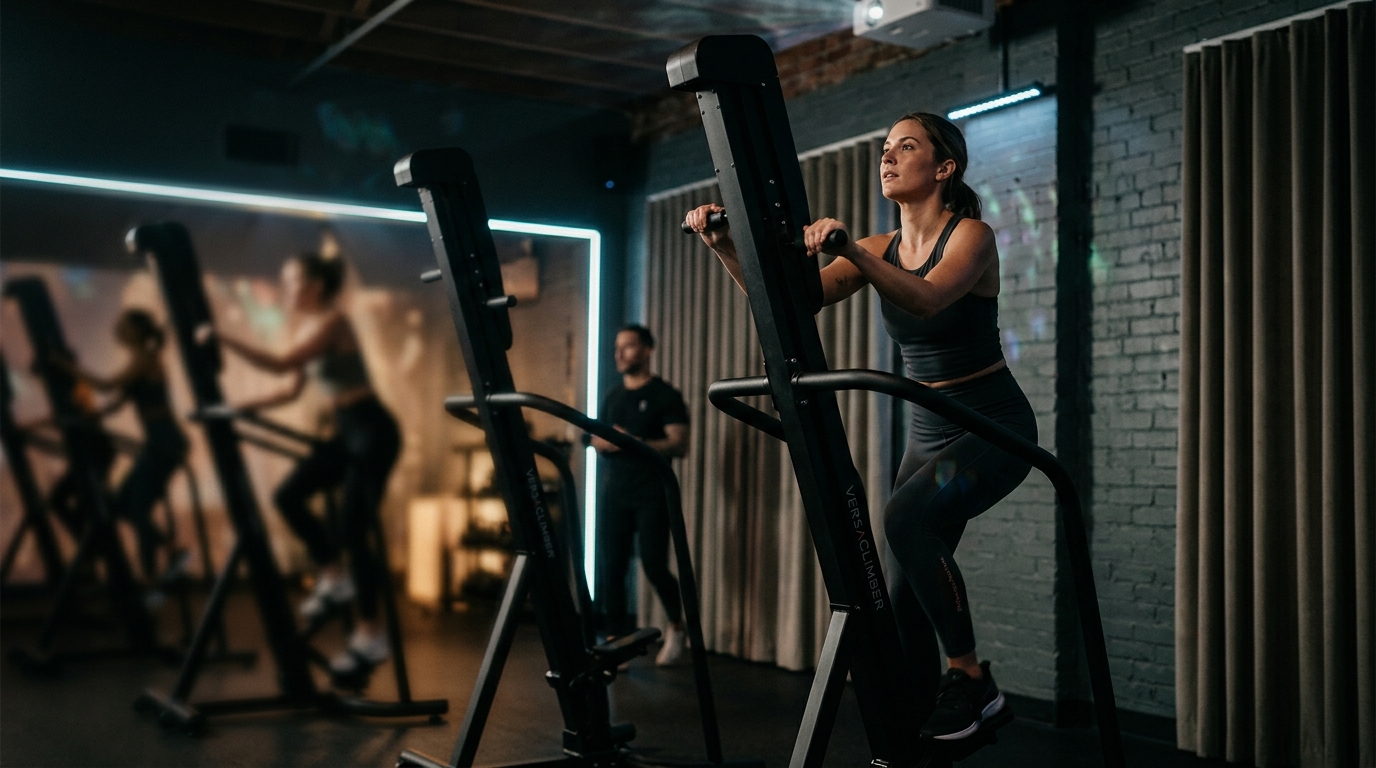
Most people see noticeable changes in endurance and body composition after 4 to 6 weeks of consistent training. For optimal results, aim for 2 to 3 sessions per week. This frequency balances high-intensity effort with adequate recovery time. At TWST Fitness, we coach clients to find their sustainable rhythm rather than pushing for unsustainable daily volume.
Understanding Frequency and Intensity
VersaClimber training is a rhythm-driven, high-intensity workout that fuses cardio and resistance. The machine simulates vertical climbing, engaging your arms, legs, and core simultaneously. Because the movement is low-impact, you can train more frequently than with running or jumping. However, the intensity remains high. Your body needs time to adapt to this specific stressor.
Beginners should start with one or two sessions per week. This allows your nervous system and muscles to adjust to the new movement patterns. As your fitness improves, you can increase to three sessions. This frequency is the sweet spot for most people. It provides enough stimulus to drive adaptation without causing overtraining. At TWST Fitness, our coaches help you gauge your effort levels to ensure you are working hard enough to see results.
The Role of Consistency
Consistency beats intensity in the long run. Missing a week because you trained too hard is worse than training moderately for a month. Build a habit that fits your life. If you can only do two classes a week, make them count. Focus on quality of movement and effort. This approach leads to sustainable progress and prevents burnout.
Recovery and Muscle Repair
Recovery is when your body actually gets stronger. During a VersaClimber class, you break down muscle fibers and deplete energy stores. Between sessions, your body repairs and rebuilds these tissues. This process requires rest, proper nutrition, and hydration. Ignoring recovery leads to plateaus and increased injury risk.
Signs of Overtraining
Watch for persistent fatigue, decreased performance, and increased soreness. If you feel drained before class, you may need more rest. Listen to your body. It is better to take an extra rest day than to push through exhaustion. Overtraining can set you back for weeks. Trust the process and respect your recovery needs.
Progressing Your Training Load
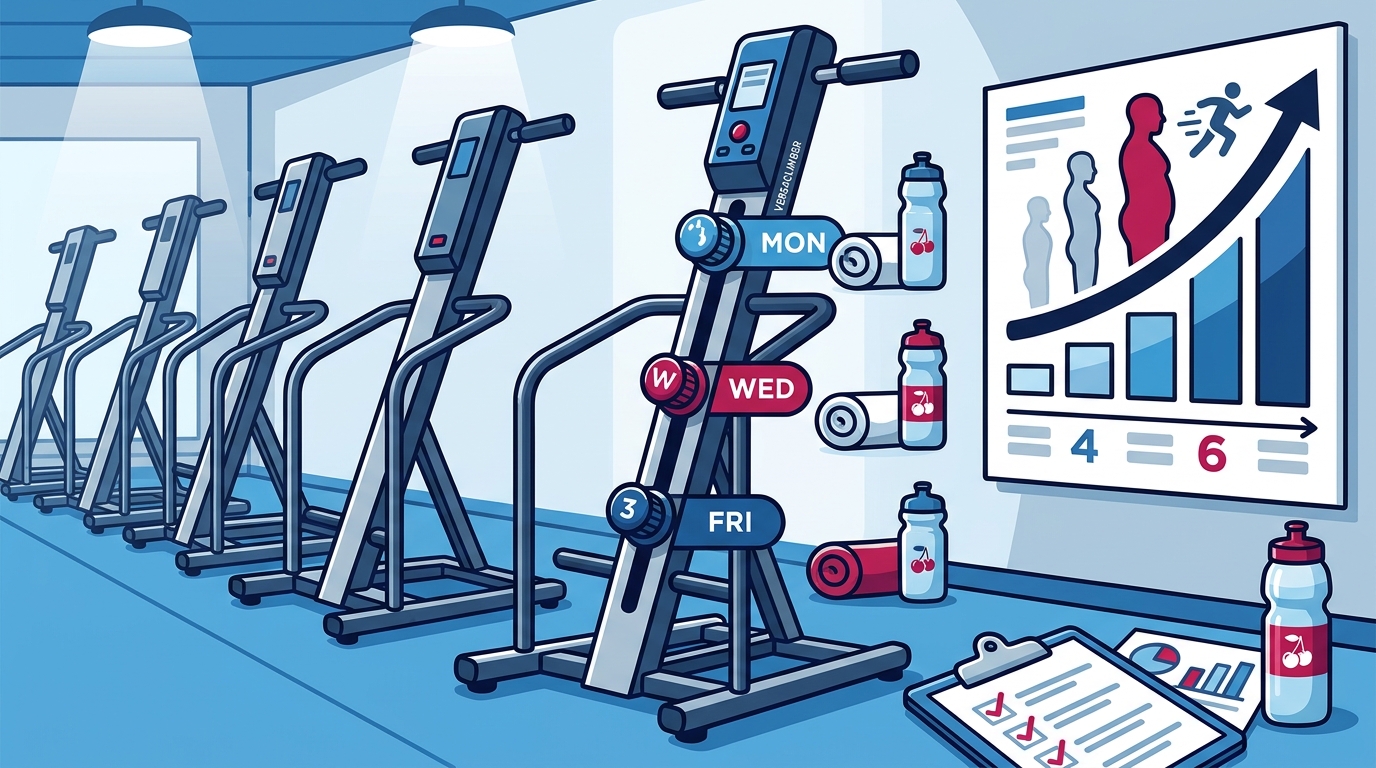
To see continued results, you must progressively overload your body. This means increasing the difficulty of your workouts over time. On the VersaClimber, you can progress by increasing resistance, climbing faster, or extending intervals. Your coach will guide you through these adjustments. This ensures you are always challenging your body appropriately.
Start with a comfortable pace and resistance. As you become more proficient, increase the intensity. You might add more 30-second all-out efforts. Or you might increase the resistance level. These small changes add up over time. They force your body to adapt and improve. At TWST Fitness, we use data and observation to track your progress and adjust your training plan.
Periodization for Long-Term Gains
Periodization involves varying your training intensity over time. You might have a month of higher volume followed by a month of lower volume. This approach prevents plateaus and keeps your body guessing. It also allows for deeper recovery. Work with a coach to design a periodized plan. This ensures you are always moving forward and avoiding stagnation.
Measuring Your Success
How do you know if you are seeing results? Track your progress using objective metrics. Record your heart rate, resistance levels, and perceived effort. You might also take progress photos or measurements. These data points help you see changes that you might not feel immediately. Consistent tracking keeps you motivated and accountable.
Expect to see changes in endurance first. You will be able to climb faster or maintain higher resistance for longer. Body composition changes may take longer. They depend on your diet and overall activity level. Be patient and consistent. Results are a marathon, not a sprint. At TWST Fitness, we encourage clients to celebrate small wins along the way.
Setting Realistic Goals
Set specific, measurable, achievable, relevant, and time-bound goals. For example, aim to increase your average heart rate by 5 beats per minute in four weeks. Or aim to complete a full class without stopping. These goals give you something concrete to work toward. They also help you stay focused and motivated. Review your goals regularly and adjust as needed.
Key Takeaways
- Aim for 2 to 3 VersaClimber sessions per week for optimal results.
- Allow 24 to 48 hours of rest between high-intensity workouts.
- Progressively increase resistance and pace to continue seeing gains.
- Track your progress using heart rate, resistance, and perceived effort.
- Consistency is more important than intensity in the long run.
- Listen to your body and adjust your frequency based on recovery.
- Work with a coach to design a personalized training plan.
Frequently Asked Questions
How many times a week should I do VersaClimber?
Most people benefit from 2 to 3 sessions per week. This frequency allows for adequate recovery while providing enough stimulus for adaptation. Beginners may start with 1 to 2 sessions and build up over time.
Can I do VersaClimber every day?
It is generally not recommended to do high-intensity VersaClimber workouts every day. Your body needs time to recover and repair. Overtraining can lead to fatigue and injury. Aim for rest days between sessions.
How long until I see results from VersaClimber?
You may start to notice improvements in endurance and energy levels within 2 to 4 weeks. More significant changes in body composition may take 6 to 8 weeks of consistent training. Individual results vary based on diet and overall activity level.
Is VersaClimber good for weight loss?
Yes, VersaClimber is an effective tool for weight loss. It burns a high number of calories in a short amount of time. It also builds muscle, which can increase your resting metabolic rate. Combine it with a balanced diet for best results.
Do I need to be in shape to start VersaClimber?
No, you do not need to be in shape to start. VersaClimber is suitable for all fitness levels. You can adjust the resistance and pace to match your current ability. Start slow and build up gradually.
How is VersaClimber different from running?
VersaClimber is low-impact, meaning it is easier on your joints than running. It also engages your upper body, providing a full-body workout. Running is primarily a lower-body activity. VersaClimber is a great alternative for those with joint issues.
Where can I find VersaClimber classes in Denver?
You can find VersaClimber classes at TWST Fitness. We have locations in Central Park and Denver University. Our coaches provide expert guidance and support to help you reach your goals.
Start Your VersaClimber Journey
Ready to see real results? Join TWST Fitness today. Our expert coaches will help you find the right frequency and intensity for your goals. Come as you are and get stronger together.